Les Héliotropes, 2024-2026, série en cours.
Tirages chromogènes sur Fujicolor Crystal Archive, uniques (variations en laboratoire), impressions pigmentaires monochromes sur Epson Cotton smooth, 310 gr.
Tirages chromogènes sur Fujicolor Crystal Archive, uniques (variations en laboratoire), impressions pigmentaires monochromes sur Epson Cotton smooth, 310 gr.
Les Héliotropes, 2024-2026, ongoing series.
Chromogenic prints on Fujicolor Crystal Archive, unique (laboratory variations), monochrome pigment prints on Epson Cotton Smooth, 310 gsm.
Chromogenic prints on Fujicolor Crystal Archive, unique (laboratory variations), monochrome pigment prints on Epson Cotton Smooth, 310 gsm.
L’héliotropisme désigne la capacité de certaines plantes à se tourner vers la lumière du soleil ; il s’agit d’un mécanisme naturel permettant d’accroitre la photosynthèse. Si ce phénomène est observé depuis longtemps, l’instrument optique éponyme, l’héliotrope (de Gauss) est en revanche moins connu. Utilisé en géodésie (cartographie de la Terre), il permet des mesures topographiques par réfléchissement de la lumière solaire sur un miroir, afin de produire un point scintillant et visible à grande distance. Celui-ci permet de repérer précisément une position lors de relevés morphologiques.
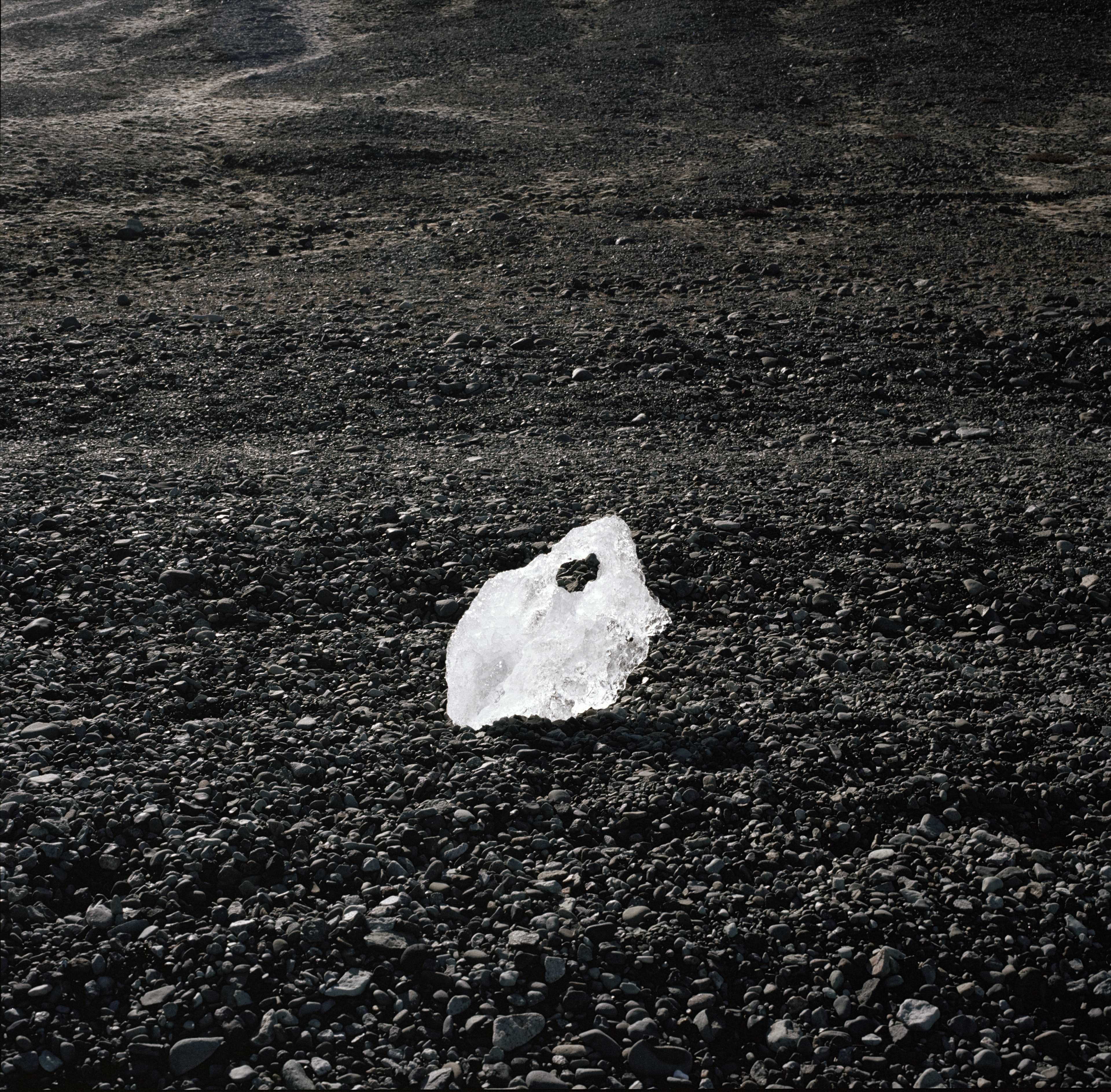
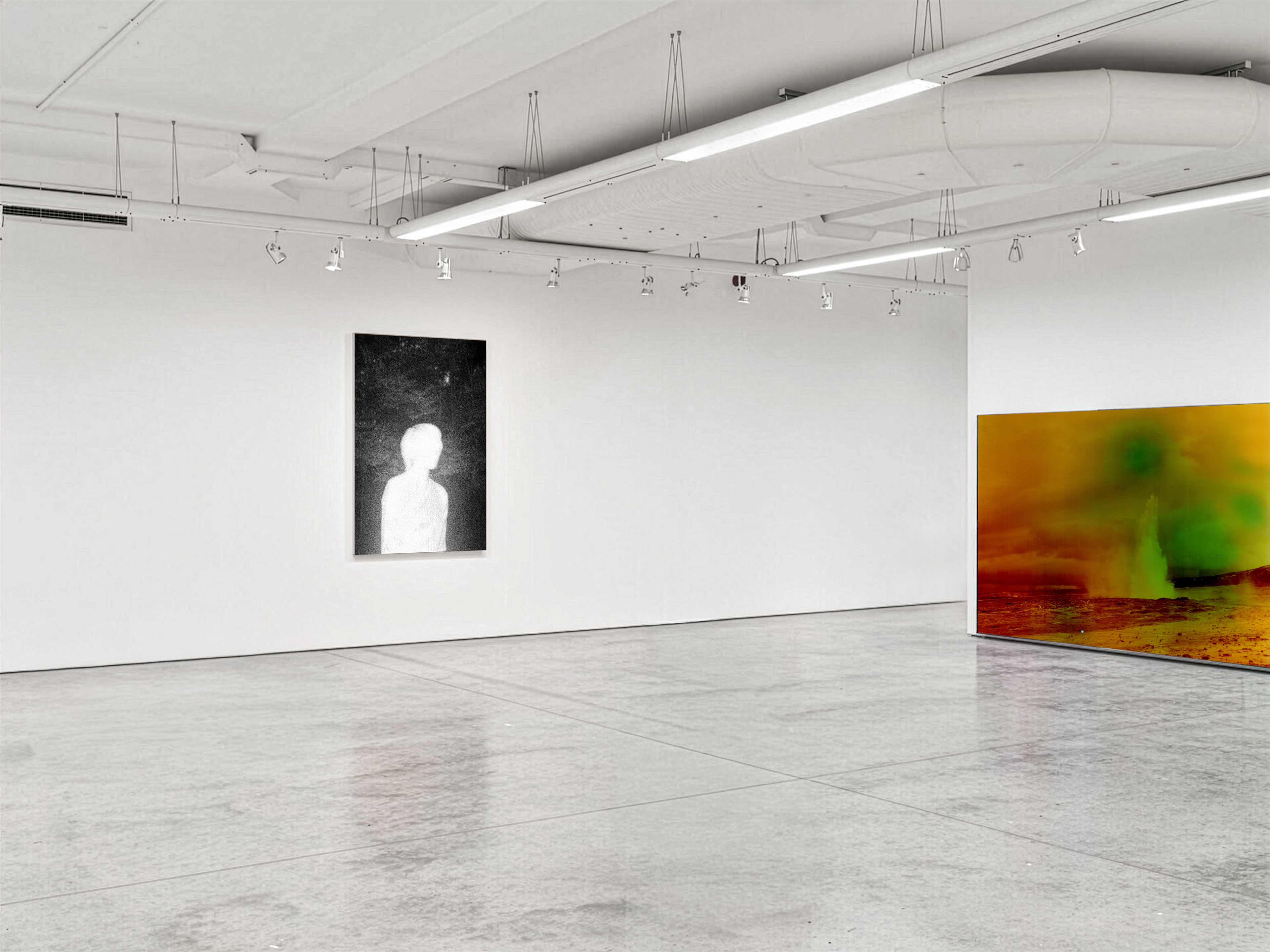
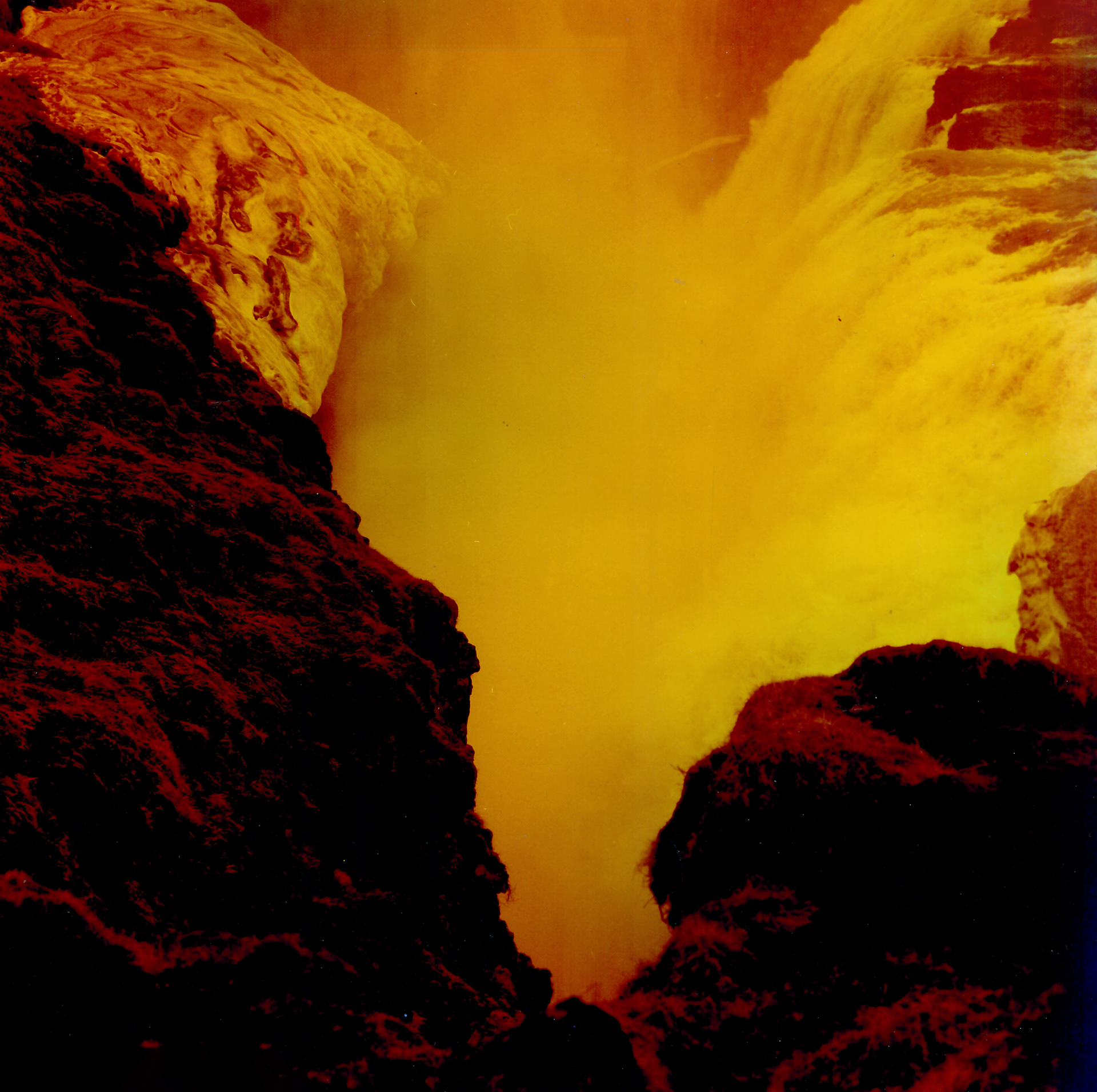
La série photographique Les Héliotropes investit cette pluralité sémantique, pour juxtaposer des paysages tournés vers une chaleur solaire prométhéenne à l’aune du réchauffement climatique, par l’usage d’un film couleur inversé redscale, et des silhouettes aveuglés par le flash, au seuil de l’aveuglement. Réalisé en partie dans les terres de feux islandaises, l’appareil photographique inverse la finalité de l’héliotrope optique, en enregistrant le rapport sensible humain-paysage sur des corps éblouis, peut-être inconscient d’une menace diffuse, en place du tracé scientifique initial. Le paysage apparait puissant et fragile à la fois, par les tonalités rouges-orangées d’une pellicule expérimentale, mais aussi par des actions paradoxales comme ce bloc de glace échoué sur les rives d’un estuaire, remodelé par la chaleur de la main de la photographe, avant de disparaitre, si ce n’est fixé par l’image.
Heliotropism refers to the ability of certain plants to turn toward sunlight; it is a natural mechanism that increases photosynthesis. While this phenomenon has been observed for a long time, the optical instrument of the same name, the heliotrope (by Gauss), is less well known. Used in geodesy (mapping of the Earth), it enables topographical measurements by reflecting sunlight onto a mirror to produce a sparkling point visible from a great distance. This makes it possible to pinpoint a location during morphological surveys.
The photographic series Les Héliotropes explores this semantic plurality, juxtaposing landscapes bathed in Promethean solar heat in the context of global warming, through the use of redscale color reversal film, and silhouettes blinded by the flash, on the verge of blindness. Produced in part in Iceland's land of fire, the camera reverses the purpose of the optical heliotrope, recording the sensitive relationship between humans and landscape on dazzled bodies, perhaps unaware of a diffuse threat, in place of the initial scientific survey. The landscape appears both powerful and fragile, through the red-orange tones of experimental film, but also through paradoxical actions such as this block of ice washed up on the banks of an estuary, reshaped by the warmth of the photographer's hand before disappearing, if not fixed by the image itself.
The photographic series Les Héliotropes explores this semantic plurality, juxtaposing landscapes bathed in Promethean solar heat in the context of global warming, through the use of redscale color reversal film, and silhouettes blinded by the flash, on the verge of blindness. Produced in part in Iceland's land of fire, the camera reverses the purpose of the optical heliotrope, recording the sensitive relationship between humans and landscape on dazzled bodies, perhaps unaware of a diffuse threat, in place of the initial scientific survey. The landscape appears both powerful and fragile, through the red-orange tones of experimental film, but also through paradoxical actions such as this block of ice washed up on the banks of an estuary, reshaped by the warmth of the photographer's hand before disappearing, if not fixed by the image itself.